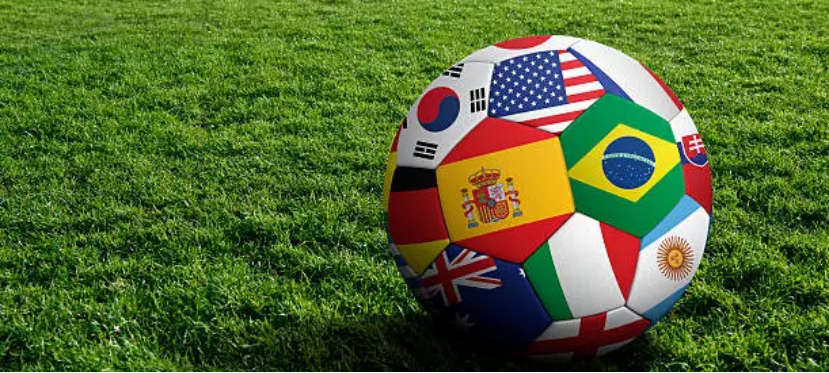
The world’s most-watched sporting event is about to make history. FIFA 2026 will be the first World Cup ever co-hosted by three nations — the United States, Canada, and Mexico! So, in FIFA 2026, you can experience surrounding the football with three different cultures, each bringing its own culture, cuisine, and atmosphere to the tournament.
A week that starts with a group-stage match in Toronto could end with a knockout game in Guadalajara — that kind of cross-continental journey is something no previous World Cup has ever offered.
The good news is that with the right preparation, navigating all of it is entirely doable. This guide walks you through everything you need to know — from securing tickets and building your match itinerary to crossing borders smoothly — so you can focus on what actually matters: enjoying every moment of the game.
Start Here: The Key Details Every Fan Needs to Know about FIFA 206
Before anything else — flights, hotels, or match-day outfits — there are a few fundamentals worth getting straight. Understanding how FIFA 2026 is structured will save you from costly missteps and help you build a plan that actually works.
Schedule and Duration
The tournament runs from June 11th to July 19th, 2026, spanning 39 days across the three host nations. That is a significant window, and the expanded 48-team format means 104 matches in total — nearly a third more than a standard World Cup.
If you are still working out how many days until the FIFA World Cup 2026, now is the time to get that countdown going, because the most popular match windows and travel dates will fill up fast.
The group stage alone stretches across roughly three weeks, with multiple matches happening simultaneously each day. Knockout rounds then follow a more concentrated pace leading up to the Final in New York/New Jersey on July 19.
Host Cities and Stadium Highlights
16 cities across three countries are hosting matches, which means the FIFA World Cup 2026 schedule is genuinely continental in scale. These 16 cities are:
| The United States | Canada | Mexico |
| New York Los Angeles Dallas San Francisco Bay Area Miami Seattle Boston Kansas City Philadelphia Atlanta Houston | Toronto Vancouver | Mexico City Guadalajara Monterrey |
In the United States, headline venues includes:
- MetLife Stadium (New Jersey) — Home of the FIFA 2026 Final on July 19, making it the single most important venue in the entire tournament.
- SoFi Stadium (Los Angeles) — One of the most technologically advanced stadiums in the world, hosting some of the tournament’s marquee group-stage and knockout fixtures.
- AT&T Stadium (Dallas) — With a seating capacity of over 80,000 and one of the largest HD video screens ever built, it is built for exactly this kind of spectacle.
- Levi’s Stadium (San Francisco) — A proven major-event host that previously staged Super Bowl 50, bringing serious logistical experience to one of the world’s biggest tournaments.
- BC Place (Vancouver) — Canada’s largest covered stadium and a landmark venue in the host nation, set to deliver some of the most atmospheric group-stage matches of the tournament.
- Estadio Azteca (Mexico City) — Arguably the most storied football ground in the world, having previously hosted two World Cup Finals and the legendary “Goal of the Century” by Diego Maradona in 1986.
Ticketing
This is where many fans hit their first wall, and for good reason. Figuring out how to get World Cup tickets in 2026 is not as straightforward as buying concert seats. FIFA manages ticket sales through its official platform in phases — ballots, first-come-first-served sales, and last-minute resales — all of which have different timelines and eligibility rules.
The safest approach is to register directly on FIFA’s official ticketing portal and monitor phase announcements closely. Hospitality packages are also available for fans who want bundled accommodation and match access, though at a premium. Avoid third-party resellers without verified credentials, as ticket fraud around major tournaments is a known risk.
Getting your ticketing sorted early is the foundation everything else rests on — your match dates determine your travel dates, and your travel dates determine everything from visa requirements to hotel availability.
Planning a Multi-Country Trip: Route Smart, Travel Smarter
Attending FIFA 2026 across multiple countries is a kind of full travel operation. The fans who will enjoy it most are not necessarily the ones with the most matches on their itinerary, but the ones who planned their movement thoughtfully. Here is how to approach it.
Visas & Entry
Because FIFA 2026 spans three countries, entry requirements are one of the first things to sort out — and they vary significantly depending on your passport. US citizens do not need a visa to enter Canada or Mexico for short stays, and the same generally applies in reverse, but fans travelling from outside North America need to check requirements for all three countries independently.
It is also worth noting that FIFA and the host governments are expected to introduce streamlined entry arrangements for ticket holders, similar to what was done at previous tournaments. For example, the FIFA Pass is an official identity document issued to confirmed ticket holders. This is expected to facilitate smoother cross-border entry across all three host nations during the tournament period.
But the policy will vary at any time. Keep an eye on FIFA official announcements as the tournament approaches. Regardless, sort your visas well in advance. Border processing during a major international event moves slower than usual, and an administrative oversight can derail an entire itinerary.
Route Design Strategies
The single biggest planning mistake fans make is building an itinerary around matches without accounting for geography. 16 cities spread across North America means some venue-to-venue distances are genuinely enormous — flying from Vancouver to Miami for back-to-back matches, for example, is technically possible but punishing.
A smarter approach is to anchor your trip around a geographic cluster and build outward from there:
- Northeast cluster (New York/New Jersey, Boston, Philadelphia) — ideal for the Final and surrounding knockout rounds
- South/Central cluster (Dallas, Houston, Kansas City, Atlanta) — strong group-stage density with manageable internal distances
- West Coast cluster (Los Angeles, San Francisco, Seattle, Vancouver) — excellent for fans who want to blend matches with some of North America’s most scenic cities
- Mexico cluster (Mexico City, Guadalajara, Monterrey) — a culturally rich circuit with outstanding football atmosphere and relatively affordable travel costs, as well as the best time to explore Mexico
- Transportation
Transportation
For inter-country movement or long US cross-country legs, domestic flights are almost always the practical choice. Book early — airfare around World Cup match windows will surge significantly as the tournament draws closer.
Within individual cities, most host venues are accessible by public transit or official tournament shuttles, and driving is generally discouraged on match days due to road closures and parking constraints. For the Mexico cluster specifically, intercity bus services between Guadalajara, Monterrey, and Mexico City are reliable and affordable if you prefer not to fly every leg.
Official and Unofficial Events Beyond FIFA 2026
The football is the headline act, but FIFA 2026 will generate an entire ecosystem of events around it. FIFA Fan Festivals — free, official public viewing zones with live screenings, interactive activations, and performances — will be set up in host cities, giving fans without match tickets a proper tournament experience.
Beyond the official programme, each host city will develop its own unofficial scene: supporter bars, cultural events, local fan zones, and neighbourhood watch parties that often capture the best of what a World Cup actually feels like at street level. Cities like Mexico City and Vancouver are particularly well set up for this, with dense, walkable entertainment districts that come alive around major sporting events.
Build some unstructured time into your itinerary. The moments that end up defining a World Cup trip are rarely the ones you planned.
On the Ground: Practical Tips for a Smooth and Safe Trip
Knowing where to go and how to get there is half the battle. The other half is showing up prepared for the realities of travelling through three countries during one of the world’s largest sporting events. These are the things worth knowing before you land.
Stadium Etiquette
World Cup crowds are famously diverse, and that is a large part of what makes the atmosphere so electric — but it also means sharing space with fans from dozens of different football cultures. A few things to keep in mind:
- Arrive early: FIFA 2026 venues will enforce thorough security checks, and queues at gates can stretch significantly on match days. Budget at least 90 minutes before kickoff to clear entry without stress. Most stadiums will have strict prohibited items lists — check the specific venue’s rules ahead of time, as they vary. Bags are generally limited in size, and outside food and drink is typically not permitted.
- Respectful behavior toward opposing fans is both expected and enforced: In practice, that means:
- Keeping chants and celebrations directed at the game rather than at rival supporters
- Avoiding provocative gestures or inflammatory language toward opposing fans
- Not encroaching on sections designated for the opposing team
- Celebrating your team’s goals with passion, but without getting in a rival fan’s face
- Following instructions from stewards and security staff without argument
North American host venues will have sizeable local security teams, and FIFA’s own event staff will be present throughout. The atmosphere across all three host nations is expected to be welcoming but use common sense in high-tension fixtures.
Health & Safety
Travelling across three countries over an extended period means your health preparation matters as much as your match schedule. Make sure your travel insurance covers all three host nations — not all policies automatically extend to Mexico, so read the fine print. Carry a basic medical kit, keep copies of any prescriptions you need, and know the local emergency numbers for whichever country you are in at any given point.
Weather is a genuine consideration. June and July in Dallas, Houston, and Mexico City can be seriously hot, with temperatures regularly exceeding 35°C. Hydration at outdoor events and on long travel days is not optional. Meanwhile, cities like Vancouver and San Francisco can be cool and overcast even in summer — packing in layers is the sensible move for a trip that crosses multiple climate zones.
Food safety standards differ between the three countries as well. In Mexico especially, travelers who are not accustomed to local food and water should take reasonable precautions, particularly during the early days of their trip.
Connectivity
Staying connected across three countries sounds straightforward until you realise that your home SIM plan almost certainly was not built for it. Roaming charges across US, Canadian, and Mexican networks can accumulate quickly — and during a World Cup, being offline is not really an option. You will need navigation between unfamiliar venues, real-time match updates, digital tickets, group chats with fellow fans, and the ability to book transport or accommodation on the fly.
This is where an eSIM makes a genuine practical difference. Rather than hunting for a local SIM card at every border crossing — or worse, arriving at a new city on a Sunday evening with no working number — an eSIM lets you pre-load a data plan covering all three countries before you leave home. There is no physical card to lose, no queuing at airport phone shops, and no awkward moment at the stadium gate when your ticket app refuses to load. It is a small logistical decision that pays off every single day of the trip, and RedteaGO’s eSIM can help you perfectly here!
Introduce RedteaGO’s eSIM for FIFA Travelers
RedteaGO’s eSIM plans are designed for exactly the kind of multi-country, on-the-move travel that FIFA 2026 demands — no physical SIM swaps, no surprise roaming bills, and no setup required beyond a quick scan before you board your first flight.
Depending on your itinerary, you can choose a single-country plan or go full North America coverage from the start:
| Coverage | Best For | Recommended Package | Unlimited-Data Starting Price |
| 🇺🇸 United States | Fans focusing on US venues only | 10GB / 60 Days – $10 | $0.47 / per Day |
| 🇨🇦 Canada | Fans based in Vancouver or Toronto | 5GB / 30 Days – $8 | $1 / per Day |
| 🇲🇽 Mexico | Fans covering the Mexico cluster | 3GB / 30 Days – $9.9 | / |
| 🇺🇸 + 🇨🇦 US & Canada | Fans travelling west-coast cluster | 5GB / 30 Days – $10 | / |
| 🌎 North America (3 countries) | Fans crossing all three host nations | 10GB / 30 Days – $20.5 | / |
Conclusion
FIFA 2026 is a once-in-a-generation event, and the fans who will remember it most are the ones who showed up prepared. Sort your tickets, plan your route smart, get your FIFA Pass in order — and before you board that first flight, activate your RedteaGO eSIM so connectivity is one less thing standing between you and the beautiful game.
The matches won’t wait. Neither should your planning.

Leave a Reply