Spain offers an appealing combination of historic cities, Mediterranean beaches, distinctive architecture, regional cuisine, and diverse natural landscapes. Whether you enjoy exploring museums, relaxing by the coast, or experiencing local traditions, a trip to Spain can offer something for different travel interests.
However, planning a memorable vacation involves more than selecting popular attractions. Choosing the right season, organizing transportation, booking activities, and preparing mobile connectivity are equally important. This guide explores the best places to visit in Spain, highlights key activities for tourists, and provides essential Spain travel tips to help you plan a smooth holiday.
Why Travel to Spain?
Spain remains one of Europe’s most popular travel destinations. According to the World Travel & Tourism Council (WTTC), international visitor spending in Spain reached €115.1 billion in 2025, making it Europe’s leading destination by international visitor spending[1].
There are several reasons why Spain continues to attract international travelers, from its cultural heritage and regional cuisine to its beaches and historic cities:
- Rich Culture and Heritage: Spain’s museums, historic palaces, UNESCO-listed landmarks, festivals, and regional traditions reflect centuries of cultural exchange. Each region also has distinctive customs and architectural styles.
- Passionate Football Culture: Sports enthusiasts can immerse themselves in Spain’s legendary football atmosphere. Visiting iconic stadiums or catching a match offers a firsthand look into local sports culture.
- Incredible Food and Lifestyle: Spanish gastronomy revolves around social connection. Enjoying fresh tapas, browsing vibrant food markets, sampling fine wines, and adopting the relaxed Mediterranean pace of life are essential parts of the travel experience.
- Beaches and Natural Scenery: With thousands of miles of coastline, scenic islands, and diverse mountain ranges, Spain accommodates both relaxing beach getaways and active outdoor adventures.
- Pleasant Travel Seasons: Spring and autumn generally offer comfortable conditions for sightseeing, although temperatures vary by region. April, May, September, and October can be particularly suitable for city exploration, while southern Spain may remain hot in early autumn.
Best Places to Visit in Spain for First-Time Travelers
For first-time visitors, Madrid, Barcelona, and Seville provide an excellent introduction to Spain’s history, architecture, and local culture. These cities offer some of Spain’s best places to visit, with attractions suited to different interests.
1.Madrid: Spain's Capital of Art and Royal Heritage
Madrid is Spain’s capital and a major cultural center, known for its world-class museums, royal landmarks, historic squares, and lively neighborhoods.
(1)Prado Museum
The Prado Museum is Madrid’s premier art landmark, holding an extraordinary collection of European fine art and masterworks from Spanish icons like Velázquez and Goya.
- Highlights: As a centerpiece of Madrid’s famous “Art Walk,” it showcases essential masterpieces alongside classical Italian and Flemish collections.
- Visitor Information: Standard admission is € It is open Monday–Saturday (10:00–20:00) and Sundays/holidays (10:00–19:00), with free entry during the final two hours each day.
(2)Royal Palace of Madrid
The Royal Palace of Madrid is the official residence of the King of Spain, although it is primarily used for state ceremonies and official events rather than everyday living. Visitors can explore its richly decorated interiors and royal collections.
- Highlights: Visitors can explore the Throne Room, Gasparini Room, Royal Armoury, and Gala Dining Room. The palace can also be included in a walking itinerary through Madrid’s historic center.
- Visitor Information: Open Monday–Saturday (10:00–18:00 October–March; 10:00–19:00 April–September) and Sundays (10:00–16:00). Book online and check for closures associated with official royal events.
(3)Retiro Park
A magnificent UNESCO-listed green space in central Madrid, perfect for resting between museum visits and historical walking tours.
- Highlights: Features a scenic boating lake (Retiro Lake), marble monuments, elegant gardens, and tranquil walking paths.
- Visitor Information: Entrance is free. The park is open daily from 06:00 to 00:00 (April–September) and 06:00 to 22:00 (October–March). Rowing boat rentals cost approximately €6–€8 per session.

Palacio Real de Madrid Salón del Trono
(Via Patrimonio nacional Official Website)
2.Barcelona: Mediterranean Charm and Gaudí Architecture
Located on the Mediterranean coast, Barcelona is celebrated for its distinctive Catalan Modernisme architecture, seaside lifestyle, and lively neighborhoods.
(1)Sagrada Família
Designed by Antoni Gaudí, Sagrada Família is Barcelona’s most recognizable architectural landmark and an essential stop for first-time visitors, famous for its grand façades and intricate stone carvings.
- Highlights: Extraordinary sculptural façades, towering interior columns, intricate religious symbolism, and colorful stained-glass lighting.
- Visitor Information: Standard tickets start at €26 (includes official app audio guide); tickets with tower access are € Opening hours vary by season, and advance online booking is strictly required.
(2)Barceloneta Beach
Situated directly adjacent to the historic Barceloneta fishing neighborhood, this urban beach brings Mediterranean resort vibes straight to the city center.
- Highlights: Enjoy scenic strolls along Passeig Marítim, relax on the sand, or dine on fresh seafood and paella at nearby waterfront chiringuitos.
- Visitor Information: Free public access with lifeguard services, showers, and lounge chair rentals. The beach is a smoke-free zone.
(3)Gothic Quarter
Barcelona’s historic core, with narrow medieval lanes, charming plazas, and Roman architectural remnants.
- Highlights: Home to the Barcelona Cathedral, Plaça del Rei, and Plaça Reial, packed with artisan shops and cozy local cafes.
- Visitor Information: Free to explore on foot. Set aside 1.5 to 2 hours to stroll through the quarter, keeping personal belongings secure in busy tourist spots.

Sagrada Família
(Via Sagrada Família Official Website)
3.Seville: Andalusian History and Traditions
As Andalusia’s capital, Seville captures the soul of southern Spain through its dramatic Moorish history, tapas culture, and passionate flamenco traditions.
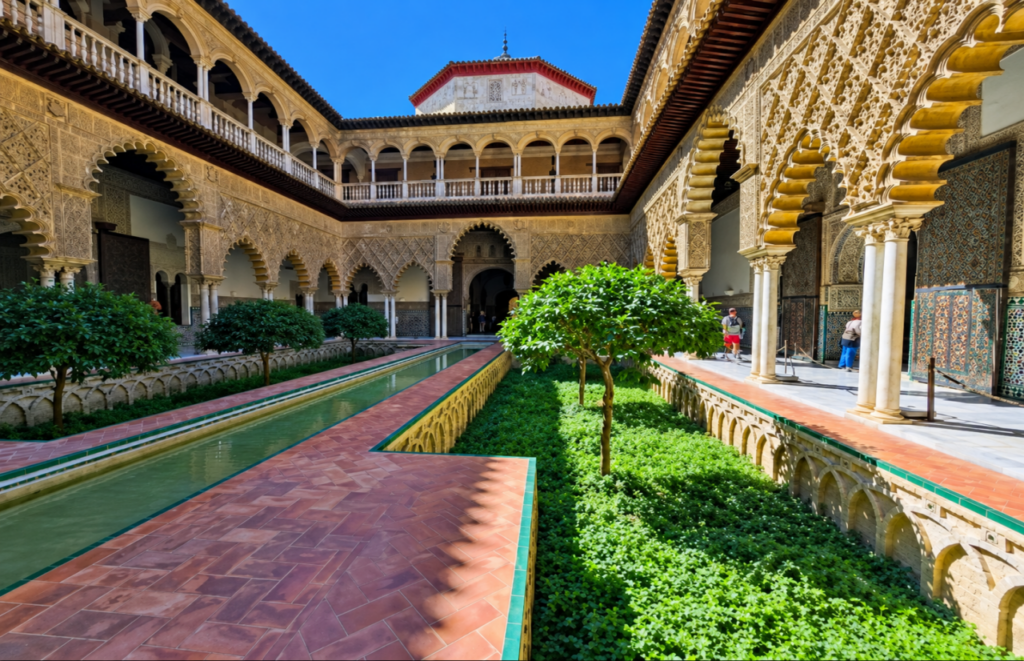
(1)Real Alcázar of Seville
The Real Alcázar is a historic palace complex showcasing Mudéjar craftsmanship alongside Gothic and later architectural influences.
- Highlights: Known for its intricate tilework, arches, peaceful courtyards like Patio de las Doncellas, and sprawling manicured gardens.
- Visitor Information: General admission is €50 (plus €5.50 for the Upper Royal Quarters). Opening hours generally run 09:30–17:00 from October to March and 09:30–19:00 from April to September.
(2)Seville Cathedral and Giralda
Seville Cathedral is one of the world’s largest Gothic cathedrals, built on the site of a former Almohad mosque. The complex preserves elements of the earlier structure, including the Giralda, and houses the tomb of Christopher Columbus.
- Highlights: The cathedral’s monumental Gothic interior, historical artworks, the Orange Tree Courtyard, and panoramic views from the Giralda.
- Visitor Information: Combined admission costs €13 online or €14 on-site. Visiting hours may change for religious services.
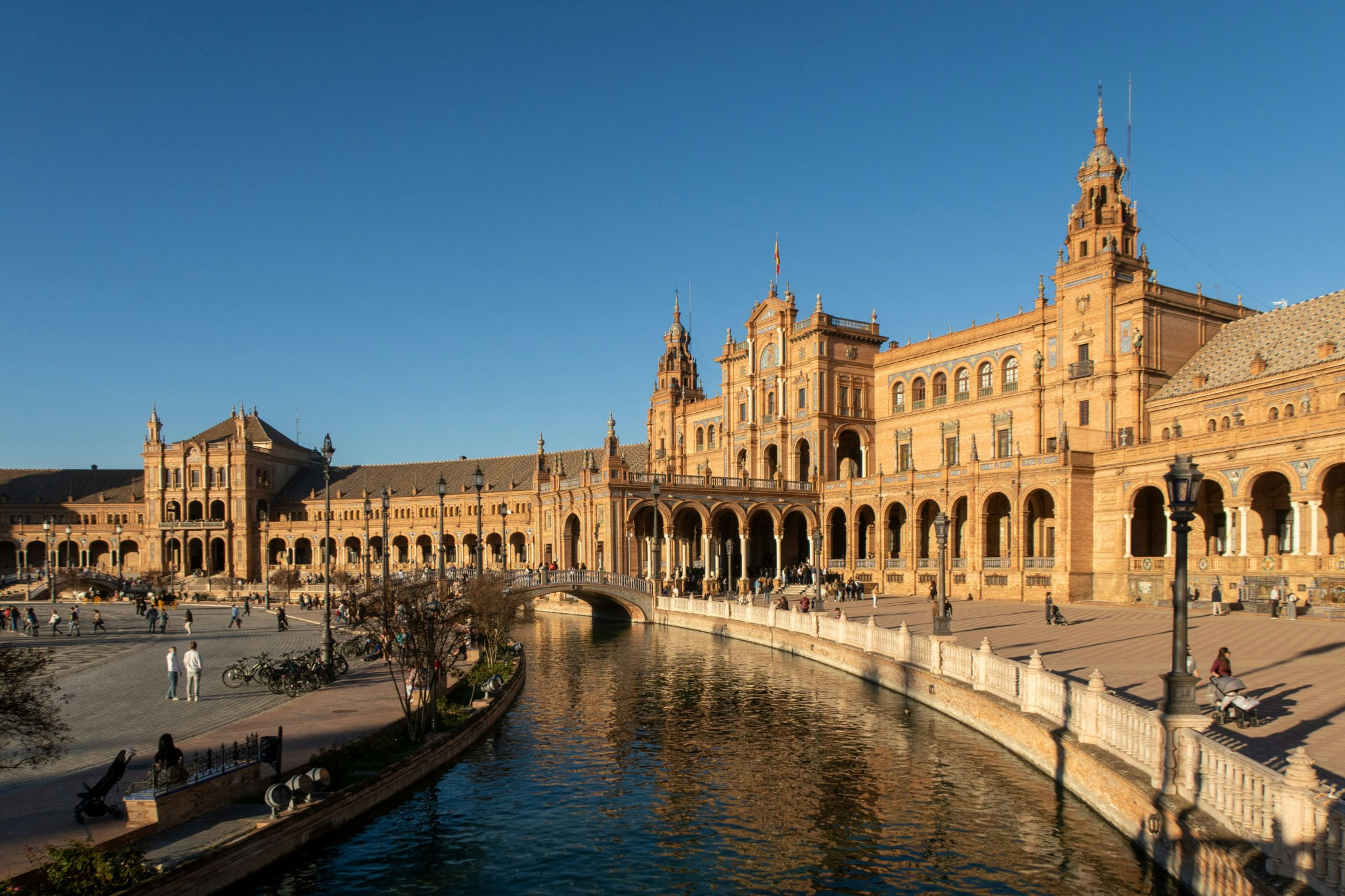
(3)Plaza de España
Built for the 1929 Ibero-American Exposition, this vast semi-elliptical plaza showcases impressive regional revivalist architecture.
- Highlights: Features 48 tiled alcoves representing Spain’s provinces, a central canal with bridges, and filming history from Star Wars: Attack of the Clones.
- Visitor Information: Free public entrance, open daily from 08:00 to 00:00. Best visited early in the morning or late afternoon to avoid peak summer heat.
Real Alcázar of Seville
(Via Real Alcázar Seville Official Website)
What to Do in Spain: Unmissable Activities for Tourists
Beyond famous landmarks, several activities in Spain for tourists provide opportunities to experience the country’s everyday culture.
- Explore Food Markets and Tapas Bars: Visit traditional markets to discover fresh produce, local cheeses, cured meats, and regional specialties. Enjoying tapas in different neighborhoods is also an excellent way to experience Spanish dining culture.
- Watch a Traditional Flamenco Performance: Andalusia is particularly associated with flamenco. Attending a live performance in Seville can introduce visitors to the expressive singing, guitar music, and dance traditions of this art form.
- Relax on the Beaches: Mediterranean destinations such as Barcelona and the Balearic Islands are popular for swimming and seaside relaxation. Spain’s Atlantic coastline offers different scenery, including dramatic cliffs and expansive beaches.
- Experience Spanish Football: Stadium tours offer behind-the-scenes experiences, while live matches introduce visitors to passionate local supporters. Following Spain’s victory at the 2026 FIFA World Cup, watching a live match or visiting a famous stadium offers another way to experience the country’s football culture.
Spain Travel Tips: What to Know Before You Go
These practical Spain travel tips can help visitors organize their itinerary and reduce common travel-related difficulties.
1.Choose the Right Travel Season
Spring and autumn are generally suitable for city sightseeing. Summer favors beach holidays but can bring intense heat, particularly in southern Spain. Winter offers opportunities for quieter cultural trips.
2.Verify Entry and Passport Requirements
Spain belongs to the Schengen Area. Passport, visa, and permitted-stay requirements depend on your nationality and travel circumstances. Many visa-exempt visitors are limited to 90 days in any 180 days. Double-check ETIAS or Schengen visa requirements applicable to your nationality.
3.Book Landmark Tickets in Advance
Sagrada Família, the Prado Museum, and the Real Alcázar can draw large crowds. Reserving official tickets in advance helps secure preferred dates and entry times.
4.Plan Transportation between Cities
Spain’s rail network connects major destinations, including Madrid, Barcelona, and Seville. Compare train schedules and fares before arranging accommodation. Local metro systems, buses, and walking routes are useful for urban sightseeing.
5.Prepare Reliable Mobile Connectivity
Mobile data supports navigation, digital tickets, train schedules, restaurant searches, and communication. Purchasing an eSIM for Spain before departure can be a convenient alternative to international roaming or searching for a physical SIM card after arrival.
Stay Connected in Spain with RedteaGO
When planning mobile internet for your trip, you can choose RedteaGO as an alternative to traditional international data roaming and physical SIM card purchases. You can access its travel eSIM services across more than 180 countries and regions.
RedteaGO offers flexible choices tailored to your specific itinerary:
1.RedteaGO Spain eSIM for Single-Country Trips
The RedteaGO Spain eSIM is designed for travelers visiting Madrid, Barcelona, Seville, and other Spanish destinations. You can choose from fixed-data packages with different allowances and validity periods based on your itinerary and expected mobile data usage.
Data Allowance | Validity | Price (USD) |
1 GB | 30 days | $0.98 |
3 GB | 30 days | $2.90 |
5 GB | 30 days | $4.90 |
10 GB | 60 days | $6.30 |
20 GB | 90 days | $10.70 |
50 GB | 180 days | $25.80 |
If you prefer unlimited-data options, you can also choose RedteaGO daily plans. You should check your selected plan’s validity, high-speed data allowance, and speed conditions before purchasing.
2.RedteaGO Europe eSIM for Multi-Country Travel
If your itinerary extends beyond Spain, the RedteaGO Europe eSIM provides coverage across 37 European countries, including France, Italy, and Germany.
You can use this regional plan across multiple covered destinations, reducing the need to purchase separate plans when crossing borders.
You can manage both options through the RedteaGO app. Before departure, confirm that your device is eSIM-compatible and carrier-unlocked, and review the selected plan’s coverage and usage conditions.
Conclusion
A trip to Spain promises an incredible mix of world-class art, architectural heritage, vibrant lifestyle, and diverse landscapes. By planning your itinerary early, booking major attractions in advance, and preparing a RedteaGO Spain eSIM before departure, you can enjoy a more convenient and well-organized travel experience across Spain.
Sources & References
- World Travel & Tourism Council (WTTC). Spain Becomes Europe’s High-Value Travel Champion as Global Visitor Spend Reaches Record US$2TN.https://wttc.org/news/spain-becomes-europe-s-high-value-travel-champion-as-global-visitor-spend-reaches-record-us$2tn
- Museo Nacional del Prado. Museo Nacional del Prado – Official Website. https://www.museodelprado.es/en
- Patrimonio Nacional. Royal Palace of Madrid. https://www.patrimonionacional.es/en/visita/royal-palace-madrid
- Madrid Destino. El Retiro Park. https://www.esmadrid.com/en/tourist-information/parque-del-retiro
- Sagrada Família. Sagrada Família – Official Website. https://sagradafamilia.org/en/
- Barcelona City Council. Barceloneta Beach. https://www.barcelona.cat/en/what-to-do-in-bcn/bathing-and-beaches/barceloneta-beach
- TURESPAÑA. Discover Barcelona: Gothic Quarter. https://www.spain.info/en/places-of-interest/gothic-quarter/
- Real Alcázar de Sevilla. Real Alcázar of Seville – Official Website. https://alcazarsevilla.org/
- Seville Cathedral. The Giralda. https://www.catedraldesevilla.es/en/the-cathedral/building/the-giralda/
- Seville City Guide. Plaza de España – Spanish Square of Seville. https://sevillecityguide.com/plaza-de-espana-seville.html

Leave a Reply